Saturday, 30 September 2017

week 11 : Design the Designers

THE PRESENTATION WEEK:

So finally here comes the presentation week.We have to give presentations on our Assessment 2.I was not nervous because i don't have a fear to stand in front of an audience and give a presentation.I am confident that i will do well.Some of my group members were saying they had a bit of stage fear.

We have worked hard for doing this assessment.I always have a positive attitude towards every situation.So this has helped me to present well for the presentation.

Even all our group members did well for the presentation.Our concept was  appreciated by our Professor.The topic was Digital Pizza table.We got good feedback after our presentation.we really think that we could have done it better.We took all the feedback positively which will help us to improve in the future.

Many presentations went on.We got to know about many innovative ideas.All the presentations were nice.I thanked my group members for being really cooperative and helping each other to make our Assessment 2, a successful one.And I also thank our Professor Firew Beshah for helping us and giving instructions in many stages in Assessment 2.


Friday, 29 September 2017

Week 10 : Design Entrepreneurial Fundraising Campaigns

In week 10 of Design it  lecture started  about sources of income for entrepreneurial innovations.which includes fund raising from business angels,crowd funding and giant providers.


I understood that fundraising is an important aspect in any business.Fund raising is a set of activities carried out in an organised manner for a specific time only to gain access to the set of resources.I learned how to introduce successful fund raising campaigns.


I was introduced to Bootstrapping which means
 starting a business without external help or capital. Such startups fund the development of their company through internal cash flow and are cautious with their expenses. Generally at the start of a venture, a small amount of money will be set aside for the bootstrap process.I learned examples of  bootstrapping methods.


fig 1: Examples of bootstrapping methods

I was thrilled  to learn about 3Fs .it  is the best for small investments but if we move for something big then other funding methods are required.I learned about the advantages and disadvantages of 3FS.3FS includes :
–Family
–Friends

–Fools


i learnt crowd funding which uses public or crowd to fund a project.I understood that it has also got advantages and disadvantages.Some examples of crowd funding are kickstarter,crowd funder and rocket hub etc.

Out of all the things learned,Business Angel was completely a new and interesting concept A Business Angel is an investor that provides development capital to growing companies or new companies. They usually want to be involved in the business in which they invest; either directly or as a mentor. Their investment is usually an equity investment rather than a loan to be repaid with interest.

It was good to study about Venture capital (VC) which is a type of private equity ,a form of financing that is provided by firms or funds to small, early-stage, emerging firms that are deemed to have high growth potential, or which have demonstrated high growth (in terms of number of employees, annual revenue, or both).


Monday, 18 September 2017

Week 9 : Design an Entrepreneurial Marketing Campaign


In this week I learned about marketing and its personas, competitors. initially we started by defining personas which is also called as the ‘target market’.
Marketing Campaign
It is regarded as the collection of all activities carried out systematically to raise awareness of ‘something’ (usually a product/service). Usually marketing campaigns are carefully designed with the audience in mind. Most markets are segmented in terms of demographic, geographic or psychographic factors. Usually customers are modelled using data from various reports and statistics collected previously. For a marketing campaign to be successful it must be very well crafted for the target market or personas.

Market Competition
Any marketing campaign should be designed with the market competition in mind. Market competition can be broadly classified into:
·        Direct competition
These are competitors operating in the same target market, offering similar or identical products or services.

·        Indirect competition
These are competitors operating the same target market, offering products or services that are close substitutes.

·        Future competition
These are competitors that are already operating in the same target market who are not currently a direct or indirect competition, but can be potential competitors soon.
The study of competition in the market and comparison to our own offerings is necessary to discern the success of our offerings in the marketplace. To analyse competition, it’s essential that we define the target industry precisely since an incorrect definition of the industry might give an incorrect list of competitors and eventually a false analysis of competition.

The Four P’s Marketing Mix
The Four P’s of marketing highlight the four key aspects such as:
·        Product
This regards to the variety, design and features of the product or service being marketed. Additionally, it stresses on the packaging, branding and most importantly the quality of the product or service.
·        Price
This regards to the appropriate pricing of the variants of the product or service. It also emphasises on discounts, payment periods and credit terms that enhance the appeal of the product or service to customers.
·        Promotion
This touches upon the various modes of raising awareness about the product or service such as advertising, personal selling, sales promotion and other public relation activities.
·        Place
This deals with the various channels through which the product is advertised and marketed, the market coverage of the product and the prime locations where the product is to be marketed. Furthermore, it stresses the importance of inventory management, logistics and transportation of the product.

Communication Channels for Marketing

Promotion and product awareness is a key factor in the success of any marketing strategy or campaign. These channels are also critical for gathering critical feedback from the consumers. Thus, it is imperative to know and understand the significance of the various communication channels that are available. The communication mediums can be broadly listed as follows:

Entrepreneurial Marketing
This is a marketing strategy that is radically different from the conventional strategies. This technique uses creative, entrepreneurial and design thinking to achieve greater throughput. The strategy also relies on inexpensive channels of promotion and customer involvement rather than conducting expensive campaigns and promotion events. Some of the techniques that classify under this category are:

      Guerrilla marketing
      Ambush marketing
      Radical marketing
      Viral marketing
      Buzz marketing
      Expeditionary marketing
      Disruptive marketing
Design as Communication
The process of design of a product is a closed loop process that requires thorough communication between the designers and users throughout the design thinking process. It is also vital that the members of the design team interact with each other, with the top management and with suppliers or partners. Proper communication between all the elements of the design team ensures that the intention of the team is translated into a proper interpretation and eventually a well thought out design. It is essential that any ideas that we create are run past customers as early as possible so that there is enough leeway to make amends to the existing design before its implemented and hits the market.


activity:1


fig 1:Group discussion


This activity was to identify the target market or persona for our innovation.i have already studied that target market  will  depend on the demographic, age group, motivation or others, so we have decided to identify our target market  for our digital pizza table. so we have decided our personas as youngsters of age group below 25 the students of high school and inter college as people of this age are more attracted towards pizza since they enjoy a  party life.They would love to do a customization to Pizza.
activity 2:


In this activity we have to define the industry type and then the main competitors we may face and collect some information about them.Since our topic is Digital Pizza Table  and we know that it is a medium scale industry.we already learned that the possible competitors are the nearest competitors who are working in the same field and trying to do something new in the market and which will compete with our product.So in our case pizza hut , dominos and pepperoni pizza are the nearest competitors we decided to find more info on their websites, social networking and marketing channels.The only way to counter act the closest competitors are to findout a way to act before them and lead the market with new ideas and promotions.
we have already studied  about the few of the marketing strategies but during the work shop we learned about entrepreneurial forms of marketing such as guerrilla marketing, ambush,radical,viral,buzz and so on.We found out that the best one which suits our product is viral marketing .So week 9 i can say that it helped me in enormous way to expand my knowledge about different target market or personas and also new marketing techniques.This is will help me a lot in my career.These topics are really important for an engineering manager. 

Monday, 11 September 2017

Week 8 : Design the Launch

In week 8, I learned the following things:


Design the launch (Learning Launch)
Introduction

The prequel to any product or service being launched into the real-world market is the learning launch. A learning launch is like an experiment in the real-world environment to seek quick, inexpensive feedback from the marketplace. The process is also known as “Play Testing”, and it’s important to be open to feedback in this phase.
            To execute a learning launch, one must plan the launch being cognizant of the following factors:
·        The nature of the product/service being launched.
·        Any assumptions to be tested.
·        Metrics crucial to the product/service success.
·        Financial capital requirements.
Execution
Once the planning phase is done, the launch is ready to be executed with tight boundaries such as goals and environment of launch. A diverse team with a mixture of optimists and realists is required to ensure a successful learning launch. The team must be having fast feedback cycles and must respond to issues that pop-up quickly. It’s crucial for the team to gather as much user feedback as possible using their interviewing skills.

Analysis
After an iteration of the learning launch the team must pool together their resources to critically analyse the market place feedback and be open to radical changes needed to enhance the product/service marketability. It’s important for the team to be mindful about the ethics when collecting, analysing and disseminating the feedback from the marketplace. After one or more iterations the team should be confident enough to get to a consensus on all aspects of the product/service so that they can decide whether to proceed with the launch or kill the idea. Once the green light for the real launch is voted, the team must start planning the actual launch.

The Real Launch
Aim at this stage of the life cycle is to offer the solution to real users and build momentum. The launch may or may not be supported with a physical event. During the launch planning stage, the product/service must have attained a fully marketable form by incorporating the feedback from the learning launch. Pre-launch promotion and narrowing down on the suppliers and locations are critical prior to the execution of the launch. At this stage the team transitions from a creative mode to a business mode and needs to expand the resources to support the same.

            Once through the planning process, the team must be clear about the approach to use, the launch timing and key players in the launch such as the press, early adopters etc. At this point the team would have developed a sound Launch Readiness Plan.


Activity:
This activity was just to present the launch of the product.lot of  students [presented well and i was noting important points from their presentations.I am not good at fast hand writing. I used to make use of the mind mapping technique to overcome this.Slowly i realised that design thinking has bought many changes to me.I have started to think like a design thinker.It made me happy.

we explained our prototype in class.The prototype was done along with my group members.The audience gave some suggestions to our prototype.They also asked some doubts regarding our concept.All the suggestions were noted by us.So we have enough time to edit the prototype before our final launch.We had done enough calculations and we can launch the product after modifying it carefully.We also gave some suggestions to other presentations during their prototype launch.
I understood from this activity that i am not comfortable with uncertainities and some unpredicatable situations.I realised that this is one of my weakness and i need to change it.

I understood that Blogging is helping me to gain more knowledge about this subject.It is also increasing my creative thinking skill.Regular blogging is just helping me realise what all things happened in class and what all things i studied that day.So i would say blogging was a good decision by the 'Design it' unit coordinator and lecturers.


Wednesday, 30 August 2017

week 7 : Design prototype

So design it subject is getting more and more better as we move forward.we had a vacation of 1 week in between.This vacation week helped me to revise all the things i studied for past weeks.This week helped me to understand and be able to carry out  Analysis of data derived from Design Thinking research,Assumption testing,Concept development,Rapid prototyping.Week 7 workshop was structured perfectly to cover these topics.
i studied how to analyse large amounts of qualitative data.


 of design thinking for which we had done some activities  in class which helped  me to understand deeply the relation of these topics with the design thinking.

i learned that 
assumption testing is  the process of organizing the large amount of rich data into meaningful category rather than reading all the text word by word.i also gained knowledge about 


  • early rapid prototype
  • later rapid prototype
  • alternative later rapid prototype

 i 
also got to know about prototyping techniques which includes:


  • Sketching
  • Story boarding
  • Paper prototyping
  • Wire framing
  • Physical prototyping

    We were shown a video about design thinking- Paper prototypes.I learned benefits and drawbacks of rapid prototyping.
  many activities were carried out in class which were really engaging.

Activity 1:
 This was a group activity.
we were shown few pictures like ingredients for making a dessert ,so we need to choose and make at least three desserts.it looked simple but we tried to work as professionals,so we  decided to use the mind mapping technique,a design thinking tool and using that we categorized the ingredients into similar categories.we have shown our work to tutor and he gave feedback about the work.


fig 1 :Activity 1


Activity 2 :
The next activity was on assumption testing.This was also a group activity. we have already developed a concept of dessert in previous activity it was to test the assumption if we can launch this dessert.
it was very challenging task as the customers have different taste preferences but we have considered VDSD test which we had learned just before this activity.
                                                                         
                                                                 fig 2 : activity 2


Friday, 18 August 2017

Week 5 : Design Research 1

So moving on to week 5 of design it subject.we were asked to form groups for the 2nd assessment which is a group assessment.so i formed a group with some of the students in the class whom i didnt knew much before.it was good to meet get some new friends and know them better.

so in this week,i learned journey mapping which is Graphic representation of customer experience as they interact with the product or service-provider.i understood that journey mapping is an important part of design thinking and i will have to focus this well.we were given an activity where we have to create a journey map right from when i started to do masters abroad,till this stage.so professor asked us to do it alone and combine the ideas later.so in the last stage ,we combined the ideas and made a journey map.i was a bit confused due to various design process models.


so i understood that journey mapping is an important concept.This activity made me realise the past and the hardwork i did to come to australia to do my masters.we made certain changes to the final journey mapping we made in the group after hearing the feedback from the professor.he told us to add reactions to each and everystep.reactions includes how we felt at that particular step.This activity made me realise i need to improve my research skills.

next topic was value chain which describes the categories of activities within an organisation that when combined which create a product or service.i understood that each set of activities adds value,costs to the offering as perceived by customers.


i understood how to add value,how to use value chain.i learned about value network which comprises the set of inter-organisational links and relationships that are necessary to create a product or service.we were asked to chose a company and apply value chain analysis to that company as a part of assessement 2.


I learned mind mapping has been recognized by companies as an effective communication tool that improves brainstorming and collaboration sessions. By visualizing concepts and connections in , people can follow conversations better and contribute more during meetings


i came to know that X-mind is a useful tool to create mind mapping.The next topic of the discussion was Design-led Research.Research is defined as 
The systematic collection and interpretation of information with a clear purpose, to find things out.I also learned there were two research approaches which is qualitative and quantitative.

I realised that there are two types of data :Primary and Secondary.
Primary Data:
Collected SPECIFICALLY for the research project being undertaken.
Secondary Data:
Collected/developed for some other purpose but now used for the research project being undertaken.

Briefing for group assessment and presentation was also done in the class.The marking rubric was also clearly explained by the professor.


Saturday, 5 August 2017

Week 4 : Design Problems

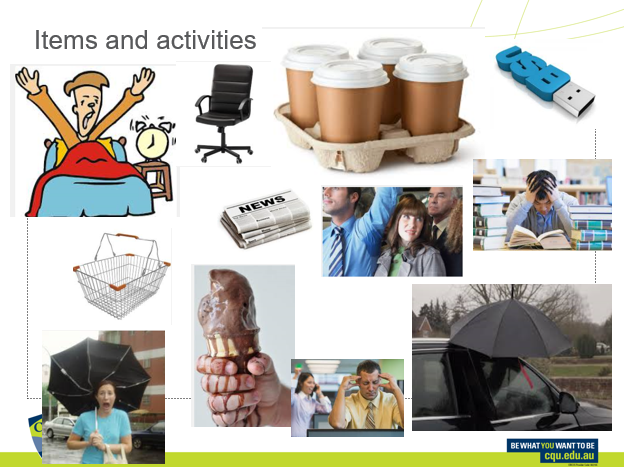
So I am entering into week 4 of design it.It has been an interesting subject so far.I am looking forward to the coming weeks.So in week 4,I learned about difference between problem solving and problem finding.So this picture was shown in class and professor asked us to say if this is a problem solving or problem finding.So many people had different opinions for this.Some people felt this as problem solving and some felt it as problem finding.For me, it felt as a problem finding.


fig 1:Problem solving or problem finding 


I understood that Design thinking  is actually an approach that can find problems rather than a just a problem solving methodology.

So we were involved in an Activity where we have to transform all the circles in a given paper to  something recognisable.we were given 2 minutes.I transformed the circles into emoticons,different geometric shapes,various small things,some alphabets etc.This activity was really interesting .I had no idea what I had to do when I was given a paper with 30 circles in it.after 2 minutes, I come up with many ideas which I didn't think about in the beginning.So this activity made me realise slowly slowly I am getting deeper into design thinking subject. The rest of lecture includes Brainstorming ideas and Fifty phrases that kill creativity.
fig 1:Activity 1


Next Activity was a group activity.we were asked to form small groups and  choose one item or multiple items) and come up with three  different but new/innovative ideas to improve/change the item, problem or activity.

we selected three items from the listed items that were ice cream cone, car side mirror issue and protecting newspaper while raining.


fig 2 : Activity 2


1.The suggestions with which we came up is double helical cone with a spoon attached to it so that  our hands won't get dirty and we can eat the whole  ice cream and if we use a double helical cone, ice cream won't go down easily and it will not get wasted
2.For car side mirror issue,as we don't have a wiper at the side mirror and while driving this may lead to a problem and so we suggested to introduce a  vacuum pipe at the mirror which can blow the air and moves the water  from side mirror and makes it visible.
3.news paper while raining gets wet in order to avoid this problem we came up with wrapping cover to cover it and store it properly and this can help it to be dry and safe.


 These were the ideas we came up with and we presented it.We compared our ideas with ideas from other groups and we modified our ideas accordingly.This activity reminds me of problem solving techniques I know and I used in my life.

The 3rd activity was also really engaging.we were shown different pictures  on the topic 'A day at the beach' and asked us to find out is there any problems which can be solved by design thinking.The problem I observed was people are carrying luggages by lifting it.Also leaving the possessions unattended is another problem. The possible solutions I came up with is that they should use suitcases which had wheels which is really a easy way to carry things.We can also use a tool to safely put our mobiles and belongings which can be digged on to sand and placed near our head when we rest.
  P  

Wednesday, 2 August 2017

week 3 : Design Theory

In week 3,I learned about the design theory.There are multiple theories that help to explain the aspects of design thinking .which are divergent and convergent theory thinking,action research,philosophical world view,learning theory,logic of reasoning,co-creation.

The equation i learned
 :    WHAT  +  HOW  =  desired VALUE


                                                             the ‘frame’

The difference between Logic of reasoning with/without design are elaborated with the help of a example.The problem situation was a druken violence and crime at a regional nightclub and street and we discussed this in groups.Many ideas were given by students.Discussion on Double loop & Triple loop learning evoke much interest in class.

Creative learning,Action research and creative learning spiral was explained by the professor and the class was really engaging.I found out a blog on design thinking moodle resources with lots of useful materials and personal experiences of design thinking.


fig 1 : Divergent and convergent thinking

fig 2 : creative learning spiral 


Further relevant theories like Ideation,Left-brain – right-brain, Decision making theories,  Task vs relationship conflicts, Creativity theories, Team working theories,Reflection in action were explained in class.What if managers thought more like designers was interesting and this was explained with the help of pictures.

Briefing of assessment 3 is also done in this week as it is related with the ongoing weekly blogging sessions.Professor gave an idea about reflective writing. A quote about reflection  which actually caught my attention was this  " Taking time to reflect back on the road we’ve taken to get here, and to appreciate every bump for the lessons they teach, can be incredibly helpful. Applying those lessons in ways that help us push forward, to progress in our goals, can be invaluable" What a beautiful way of defining reflection.


week 2 : Design process

In week 2,I learned about Design thinking.I learned the difference between design and business.I learned the design process which includes Empathize,define,ideate,prototype and test.If the design process is broken down in to design tools it includes what is,what if,what wows and what works.
De    design thinking broken down into design thinking tools include Journey mapping, value chain analysis,mind mapping,brainstorming,concept development,assumption testing,rapid prototyping,customer co-creation and learning launch.

     we saw a video about IDEO shopping cart project and it was really informative.I learned about Double diamond design thinking process which consists of discover,define,design,deliver.We were shown some innovation stories.it was really interesting.These innovation stories made me more attracted to design thinking subjects.So the resources provided in this unit are really quality stuff.


fig 1 :Double diamond model

We were given a rough idea about assignment 1 in which we are supposed to design a poster.tutor showed us some sample posters which were really good  so that we can design the posters according to the unit requirements.After seeing the sample posters i had an idea how  to design the posters for assessment 1.Reflecting on today's workshop makes me feel happy and excited.


fig 2 :Sample Poster

Week 1 : Design it

Hi everyone, i am too excited to start writing my first blog.Even though i use different social medias,i have never been to the world of blogging.I think blogging is one of the best thing about the 'Design it' subject.Professor gave an introduction about what 'Design it' subject is.He gave idea about this unit,assessment requirements,learning outcomes etc.He explained what all things are given in the moodle for the subject.Honestly, This was completely  a new experience for me with the “Design” module.The textbook used for this subject is 'Designing for growth' by Liedtka J. and Ogilivie .T

 I got an idea about how to be successful in this unit and how this unit is different from other units.It was presented in a slide.i was a bit nervous after reading this.Yea..but slowly i understood that this  unit is  going to be really interesting.i understood that this unit will push me out of my comfort zone.i learned what is entrepreneurship,small and medium-sized enterprises and the entrepreneurial process.Innovation and diffusion section was also new for me.Professor just gave us an introduction about blogging in this class.


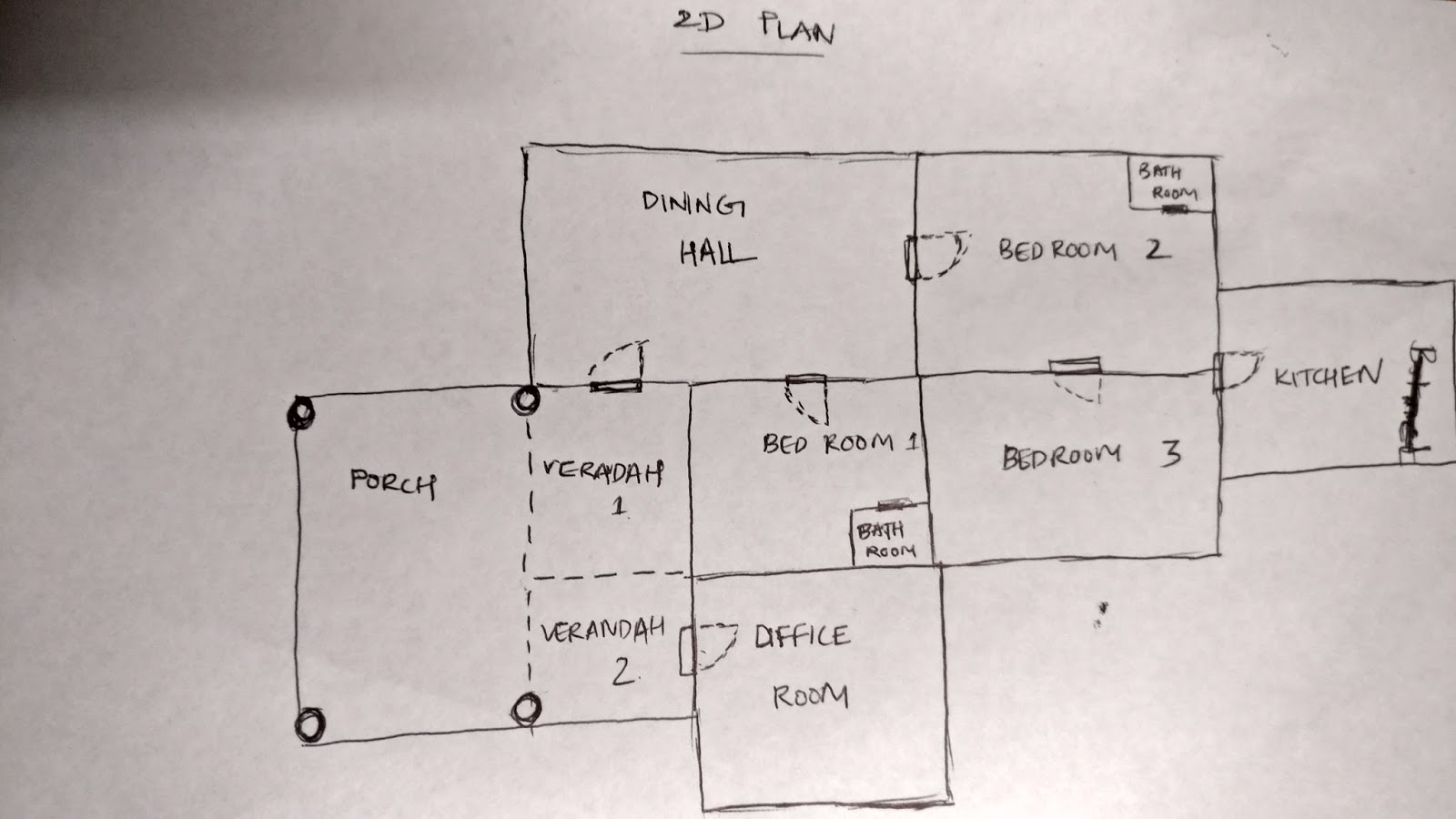
We also had an activity where Professor asked to define 'design it' in a single  sentence and draw any picture related to 'design it' in the given paper.After that we talked about what all designs can be made from the picture.we exchanged the picture among friends and they shared their views.we also had discussions.I have realised there are difficulties for me in transforming my ideas and thoughts in to designs.I drew a 2 dimensional plan of a house.This activity was really engaging and informative.
fig 1 :Activity
fig 2:Model of innovation  process


week 6 : Design Research 2

(Deleted unknowingly) i had already wrote the blog for Week 6 .But it got deleted unknowingly while editing before last submission.So i ha...